

Short answer first, because that is what I wanted when I went looking: for Bruno, the Zesty Paws glucosamine soft chews did the job I bought them for, and fish oil never entered his routine. I have not fed him fish oil. Not one dose. So I am not going to pretend I ran a clean side by side comparison in my kitchen. What I can give you is nine months of watching one dog on the chews, what my vet said about the other option, and a plain read on where each one earns its place.
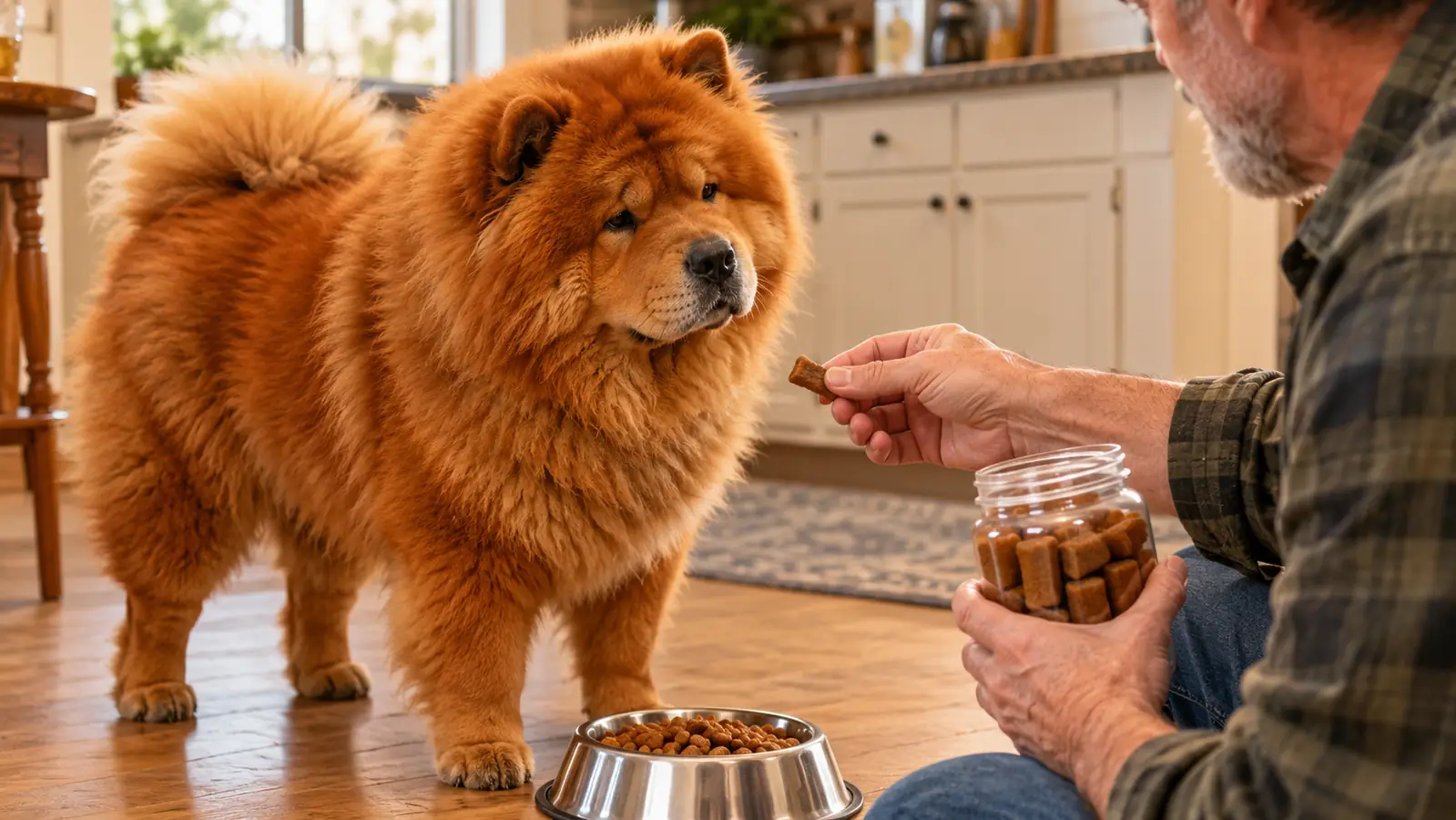
Bruno is a 7 year old cinnamon red rough coat Chow Chow, 64 pounds, neutered, and mine since he was 9 weeks old. In February 2026, Dr. Amara Nwosu found mild hip dysplasia on his X-rays. He had been slow to rise off the bedroom carpet. Not lame, not crying, just slow. Her advice was a joint supplement and a steady weight, and she said it the way she says most things, without drama. I bought the Zesty Paws chews that same week.
Here is the thing about this comparison. These two products are not really competing for the same job, even though both get filed under dog joint care. A glucosamine chew is aimed at the joint. Fish oil is aimed at the whole dog, and the coat and skin are where most people notice it first. Once that landed for me, the choice stopped feeling like a coin flip and started feeling like a question about what I was actually trying to fix.
| Zesty Paws glucosamine chews | Fish oil | |
|---|---|---|
| Main job | Hip and joint support | Skin, coat and general health |
| Named actives | Glucosamine HCl (shellfish), chondroitin sulfate (porcine), 500 mg OptiMSM per chew | EPA and DHA, amounts vary by bottle and by brand |
| How it is given | Soft chew, counted like a treat | Pump, capsule or squirt bottle |
| Daily amount for a 64 pound dog | 2 soft chews with breakfast, per the label for his weight | Set by the product and by your vet |
| Coat and skin | Not what the label claims, and I saw no coat change | The main reason most people start it |
| Joint research | Mixed, and I am not the one to referee it | Long and well worn for omega 3s in dogs |
| Picky eater risk | Bruno takes it as a treat, no negotiation | Some dogs refuse it outright |
| Mess | None, it is a chew | Oil on the bowl, the floor and the ruff |
| Using both | Two chews in the morning | Can sit alongside a joint chew if the vet agrees |
Where Zesty Paws Wins
The label match comes first. The chews carry glucosamine HCl from shellfish, chondroitin sulfate from porcine sources, and 500 mg of OptiMSM per chew, the distilled form of MSM. That is three named ingredients pointed straight at the hip and joint job Dr. Nwosu described in February, in a soft chew with a bacon flavor. When your vet says joint supplement, this is the shape of thing she means. Fish oil does not carry any of those three on its label, and it was never sold as a hip product.
The second win is that I can count it. Bruno gets 2 soft chews a day, both with breakfast, which is the label amount for his weight. I started him at 1 a day for the first week and stepped up. A 90 count container lasts 45 days at that rate, so restocking is a date on the calendar and not a guess. There is no pump, no measuring, no oil on the rim of a bottle, and nothing to spill on the tile when my hands are already full of dog.
The third win is that he takes it. A Chow does not take things. A Chow allows things, and only after he has decided the thing was his own idea. Bruno eats these off the top of his kibble, chews them, and then looks at me as though he has done me a kindness. A supplement a dog refuses is not a supplement. It is a scoop of powder in a bowl. That single point decides more of these comparisons than any ingredient panel.
Where Fish Oil Wins
Coat and skin, plainly. The omega 3s in fish oil, EPA and DHA, are the reason most people start it, and the reason a lot of handlers keep it in the rotation for a rough coated dog. Bruno has a thick ruff and feathered pants, and Fort Collins in winter is dry air and forced heat. If my problem had been a dull coat, flaky skin, or a dog scratching at his ruff, I would have spent my February reading about fish oil instead of glucosamine.
The research is the second concession. There is a long, well worn body of work behind omega 3s in dogs. The joint research on glucosamine in dogs is more mixed, and I am not a vet, so I am not going to referee it. What I will tell you is what Dr. Nwosu said, which was that fish oil is reasonable for general health, that the amount has to come from the product and from her rather than from a guess, and that nothing on a shelf replaces keeping the weight steady.
The third is flexibility of use. Fish oil can sit alongside a joint chew instead of replacing it, and for a lot of dogs that is the actual answer. It is also the one part of this I cannot report on from my own kitchen, because I have never fed it. I would rather say that plainly than dress up a guess as experience. If you want a straight answer on whether your dog should be on both, the person who has actually seen your dog's X-rays is the one to ask.
If the slow rise off the floor is the problem, start with the label that matches the problem
Bruno has been on these for nine months. Two soft chews with breakfast, bacon flavor, 90 count to a container. It is not a cure for dysplasia and I would not tell you it is. It is the thing my vet asked for, in a form my dog will actually take.
Amazon Check Today's Price on Amazon →What the Label Actually Says
Read the numbers on the back before the words on the front. A glucosamine product should tell you how much glucosamine is in a chew, and that number matters more than the picture of the happy dog. The Zesty Paws label lists glucosamine HCl from shellfish, MSM as OptiMSM at 500 mg per chew, and chondroitin sulfate from porcine sources, and the feeding amount changes with the dog's weight. Bruno is 64 pounds, so he gets 2 chews a day.
On a fish oil bottle, the number that matters is not the total milligrams of fish oil. It is the EPA and DHA. Two bottles with the same big number on the front can carry very different amounts of the two things you are actually buying. The bottle may also want refrigeration after opening, which is worth knowing before you put it in the cabinet next to the treats and forget about it for a month.
One more thing about containers. A 90 count container of chews is 45 days for a 64 pound dog. That is convenient if the dog likes them and clutter if he does not. Buy the smaller count first, find out whether your dog will eat the thing, then buy the larger one. I did it backwards with a deshedding tool in 2025 and I still have the tool, sitting in the garage beside the tub, reminding me.
And read the ingredient line for what the chew is built on, not just what it delivers. Glucosamine from shellfish and chondroitin from porcine mean a dog with a shellfish or pork sensitivity needs a different product and a conversation with the vet, not a smaller dose of this one. That is a five minute check and it saves a phone call later.
Nine Months on the Chews, Honestly
I bought the chews in February 2026, the same week as the X-rays. The first week was 1 chew a day so I could see whether his stomach agreed with it. It did. From there he went to 2 with breakfast and he has had 2 every morning since, through the spring coat blow, the summer heat, and the October blow. Nine months, no skipped mornings, no refusals, no bribing with peanut butter.
At about 8 weeks I noticed the change. He was getting up off the kitchen tile in the morning with less gathering, if that makes sense. The first three steps of the day had stopped being a negotiation. By summer he was still slow after a long nap and still stiff on cold mornings in a house that sits at 5,000 feet, and I want to be honest about that. His hips are still his hips. The supplement did not change the X-ray and it was never going to.
What it also did not do is anything for his coat. He still sheds, he still mats behind the ears if I skip the slicker for a week, and the ruff still holds whatever he walked through on the patio. That is grooming work, and no chew on earth replaces it. A joint chew does one job. Mine did that job and stayed out of the way of the others.
He still has the hips the X-ray showed. What changed is how much arguing the morning takes.

The Part Both Sides Agree On
Weight. Dr. Nwosu said it before she said supplement, and she said it again at the February checkup. A 64 pound Chow with dysplasia is already carrying a load, and five extra pounds on those hips undoes more good than any chew or any oil can put back. Bruno has stayed at 64. I measure his kibble with a cup and I do not free feed, and that is less interesting than a supplement but it is not optional.
Neither product is a substitute for the vet either. X-rays found this. A supplement bought off a listing would not have, and a grown dog who is slow to rise can be slow for reasons that have nothing to do with his hips. If you are reading this because your dog is struggling and no one has looked at him, book the appointment first and shop second. That is the least glamorous advice in this article and the most useful.
The last thing both sides agree on is patience. Nine months is not a dramatic timeline, and it is roughly how long it took me to trust what I was seeing. If you are expecting a dog to bounce off the couch in ten days, you are going to be disappointed by a chew and by an oil alike. What you are buying is a small daily input, and small daily inputs are judged over seasons, not weekends.
If You Want to Add Fish Oil Later
If you are already feeding the chews and wondering about oil, ask your vet at the next visit rather than at the bowl. There is a real case for both, and there is also a case for not stacking supplements because a forum said so. Dr. Nwosu's rule with Bruno has been one change at a time so we can tell what did what, and I have stuck to it for nine months.
If you do add it, add it the boring way. Pick a product with clear EPA and DHA numbers, set the amount by your vet and not by the cap, give it with food, and watch the stool for a week. Keep the chews where they are while you do it. And if the oil makes his ruff greasy, which it will if he dribbles, you are back to the slicker and the bath routine anyway. That is not a reason to skip it. It is just a thing to know.
What I'd Skip
I would skip buying the largest container on the first order. I would skip expecting a joint chew to fix a coat, and I would skip guessing a fish oil amount from a capsule meant for a person. I would also skip switching products every three weeks. If you change three things in a month you have learned nothing except that something might have helped, and you have spent a month doing it.
The other thing I would skip is the idea that you have to pick a team. These two are not rivals in any real sense. One is aimed at the joint and one is aimed at the whole dog. If your dog has a diagnosis on film, start with the one your vet named, then ask about the other. That is the least dramatic path and the one most likely to actually work.
Who Should Buy Which
Buy the Zesty Paws chews if your vet has pointed at the hips or the joints, if your dog is slow to rise, and if you want something you can count and hand over as a treat. Buy them especially if your dog is picky, because a soft chew is easier to get into a Chow than a capsule or a pump. That is not a small consideration in this breed. It is the whole ballgame.
Reach for fish oil first if the problem you actually see is coat and skin, dry winter flaking, a dull ruff, or scratching, and if your vet has cleared it. Ask about both if your dog has a diagnosis and a coat that takes weekly work. And if your dog is on any other medication, the vet answers that question, not me. I am a retired school office worker with one Chow, a rubber mat on the patio, and a calendar full of grooming days.
For a dog with hips on film and a coat that already has its own grooming kit, this is the one that stayed
Nine months, two soft chews with breakfast, no fight at the bowl. Start with a 90 count, follow the label for your dog's weight, and check with your vet before you add anything else to the routine.
Amazon Check Today's Price on Amazon →