
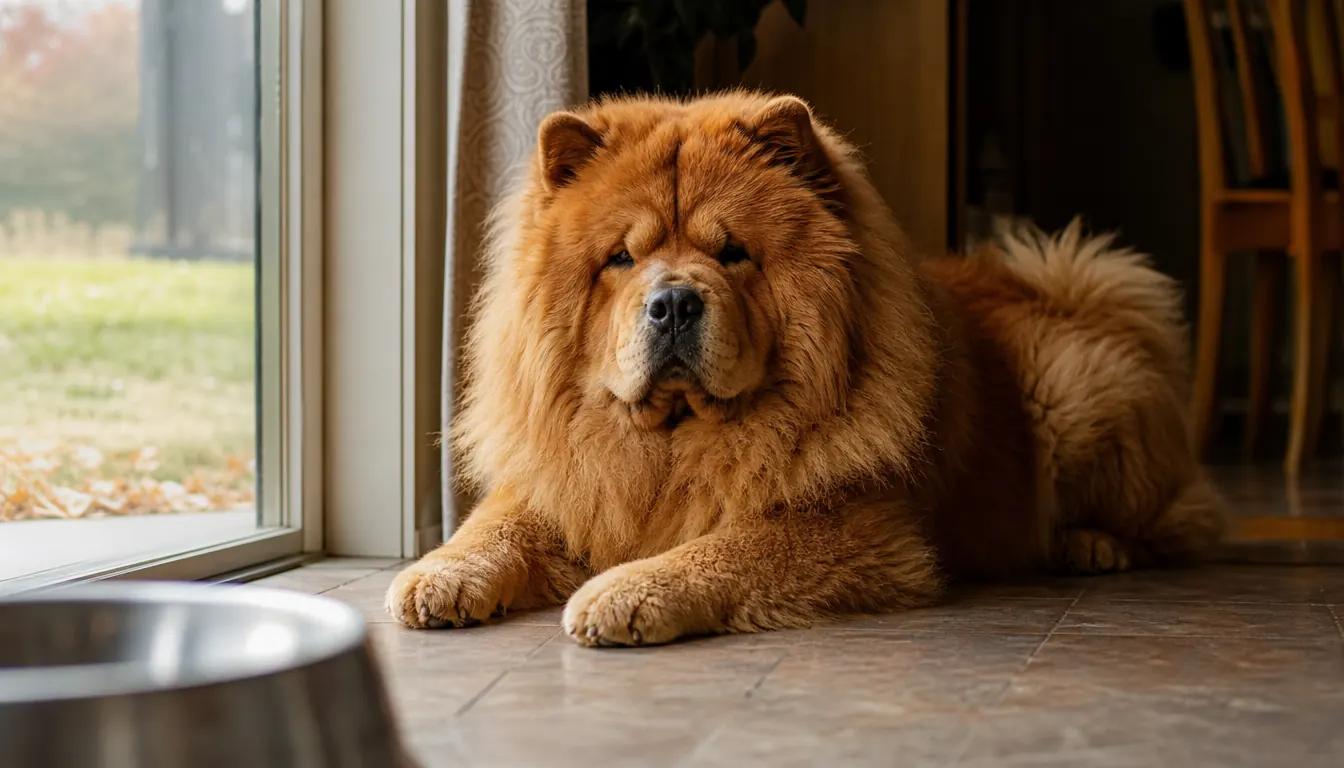
Bruno is seven now, a cinnamon red rough coat who weighs 64 pounds and has opinions about everything. Last winter he started doing something I did not like. He would stand over his bed for a second or two before pushing up, and on the kitchen tile his back feet would slide a little before he got his legs under him. I blamed the cold. Then I blamed his age. In February 2026 I finally put him in the truck and drove him to Dr. Amara Nwosu, who took X-rays, looked at them for a while, and told me his hips were mildly dysplastic.
Her advice was not dramatic. Keep his weight steady, keep him moving, and put him on a joint supplement. That was the whole plan. No surgery talk, no long list of things he could not do anymore. I have spent nine months since then figuring out what actually helps and what is just something to buy, and the chew he gets with breakfast every morning is Zesty Paws glucosamine soft chews, bacon flavor, 90 count. What follows is the order I would do it in if I were starting over, including the parts that have nothing to do with a chew.
The two chews Bruno gets with breakfast, nine months in
Zesty Paws glucosamine soft chews with glucosamine, chondroitin and MSM. Two chews a day for a 64 pound dog, both with his morning kibble. Ask your own vet before you start anything.
Amazon Check Today's Price on Amazon →Step 1: Get His Hips Looked At Before You Buy Anything
A Chow who is slow to rise is not automatically a Chow with arthritis, and he is not automatically a dog who needs a supplement. Before I made the appointment I spent about five weeks doing my own research, which is a polite way of saying I read forums at ten at night and bought a bottle of something with a dog in a lab coat on the label. None of it told me whether Bruno had dysplasia, arthritis, or a sore foot from the tile. Bruno's X-rays cost me an afternoon and a fair amount of worry, and they told me exactly what I was dealing with: mild hip dysplasia, no cruciate problem, nothing going on in his spine. Without that picture I would have been guessing at the problem for months while buying things off the internet. Guessing is expensive and it wastes the dog's time.
There is a practical reason to go first, too. If your dog is carrying extra weight, or has a thyroid issue, or is lame on one side only, the plan changes. Dr. Nwosu put Bruno on the scale, told me 64 pounds was where he should stay, and said the single best thing I could do for his hips was not let him get to 70. A supplement is a small piece of this. It is not the whole thing, and nobody honest will tell you otherwise.
What she did not do was promise me anything. She said a glucosamine supplement may help support the joint, and it may do nothing I can see. She said give it two months, keep notes, and stop if his stomach disagrees. I have repeated that speech to three neighbors since, because it is the most useful thing anyone has told me about dog joints.
Step 2: Read the Label the Way You Read a Feed Tag
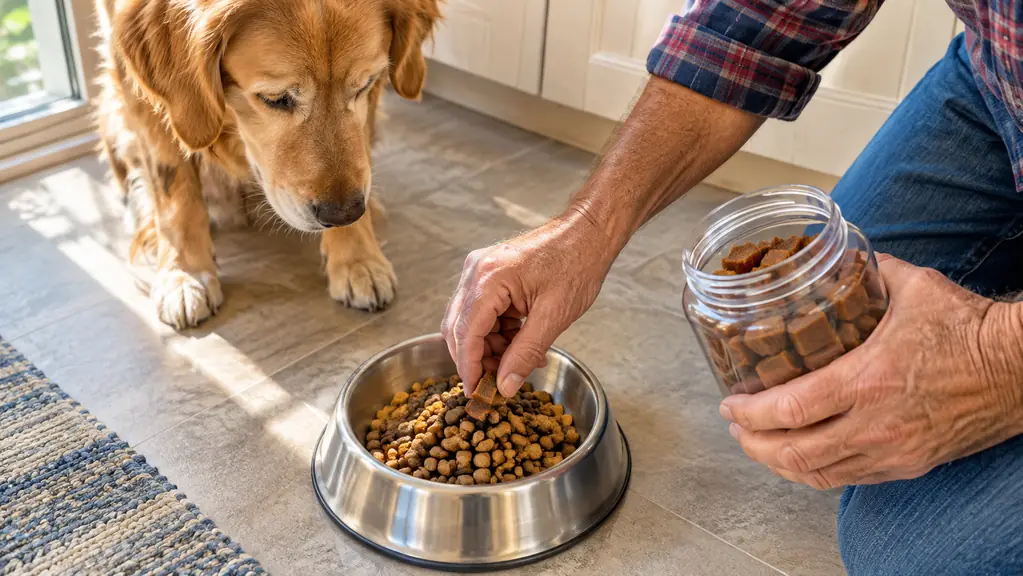
A lot of joint products list a mystery blend and a pretty picture. I want named ingredients with numbers next to them. The Zesty Paws label lists glucosamine HCl, chondroitin sulfate, and 500 mg of OptiMSM, which is the MSM. The listing also says the formula is built to help maintain joint health, lubrication and resilience. I am not a vet and I cannot verify any of that from my kitchen, but I can read a label, and this one tells me what is in the container.
Form matters as much as the ingredient list. Bruno is a Chow, which means he is suspicious of anything new and has a long memory about being tricked. A soft chew he will take from my hand. A pill in a wad of cheese he will dissect on the rug and leave the pill on the tile like a small accusation. Soft chew was the right call for him, and the bacon smell is the reason he now stands by his bowl at 6:40 in the morning.
Two things worth knowing. The glucosamine is shellfish derived, so if your dog has ever had a reaction to shellfish, tell your vet before you open the container. And the container is 90 chews, which at Bruno's dose is 45 days, so put it somewhere a determined dog cannot reach. Mine lives on the shelf above the kibble bin, behind a closed door.
Step 3: Start With One Chew and Dose by His Weight
The label gives a starting amount and then an amount by weight, and I followed it instead of guessing. Bruno got one chew a day for the first week. After that he went to two soft chews a day, which is the label amount for his size. Both go in the bowl with breakfast, not split across two meals, because I am more reliable when there is only one step to remember.
Watch the first week for stomach upset. Loose stool, a dog who goes off his food, anything that looks wrong, and you stop and call your vet. Bruno had no trouble at all, which is luck and not a guarantee. If you have a smaller Chow, or a puppy, or a dog on other medication, the amount on the label is a starting point for a conversation, not a prescription.
Eight weeks in, he was up off the bedroom carpet on the first try more mornings than not. His hips were still his hips. That was the whole result, and it was enough to keep going.
I also stopped expecting the chew to do anything visible in the first two weeks. It did not. Around week eight I noticed he was getting up in the morning without that pause first. What I remember is a gray Tuesday in the middle of April, cold and wet out, and he came off the bedroom carpet in one motion instead of two, then stood in the kitchen looking at me like I was keeping him from something. That is the entire change, and for a 64 pound dog with mild dysplasia it is a change worth having.
Step 4: Hold His Weight Steady and Keep the Exercise Dull
This is the part nobody wants to hear, and it matters more than the chew. Extra weight on a dysplastic hip is a tax paid every time the dog stands. Bruno gets measured kibble, two meals a day, and the extras are limited to a green bean or a piece of his own chew. I use one scratched plastic measuring cup that lives in the kibble bin, level and not heaped, because a heaped cup twice a day is how a dog quietly gains four pounds in a winter. He is not starving. He is not getting buttered toast off my plate either, which he would like you to believe is a medical necessity.
Exercise should be boring and regular. We do two shorter walks, early morning and after the heat breaks in the evening, and in July we skip the middle of the day entirely. On the worst weeks we walk the shaded side of the street and back for twenty minutes and call that enough. Fort Collins sits around 5,000 feet and the summer days run into the 90s, and Bruno pants hard once it passes about 80 degrees. A hard weekend of running does more harm than a week of easy walks does good.
Traction is the cheap fix that gets overlooked. There are rubber mats on the kitchen and laundry room tile, the paths he uses are kept clear, and the vet tech trims his nails at every checkup so his feet can grip. A dog who is slipping is a dog who is bracing, and bracing is hard on hips. None of this costs much and all of it helps.
Step 5: Give It Eight Weeks and Write Down One Thing
Pick one thing to watch and write it down once a week. Mine was the morning rise. How many seconds did he stand over the bed before pushing up, did he get it on the first try, did the back feet slide. One sentence, Sunday night, in the back of a notebook. That is the only way I could tell you honestly that eight weeks made a difference, because memory is a liar and we all want the thing we bought to be working.
What I can tell you is what it did not do. It did not make him a young dog. He is still stiff after a long nap. He still hates having his back feet touched and will move his leg away like I am committing a crime. He still pants in the heat. If someone tells you a chew fixes dysplasia, they are selling something, and you should keep your wallet closed.
What the Zesty Paws chews did, as far as I can see in my own kitchen, is make the mornings easier and keep him moving on the days he would rather not. Nine months in, two chews a day, one container every six weeks or so, and I will keep buying them until something changes. That is a decision made on one dog, in one house, and your dog is not my dog.
What Else Helps
The coat work matters more than people expect. A Chow in full coat with mats behind the ears and in the pants is a dog who is being pulled at every time he turns his head, and a dog who is uncomfortable in his skin moves worse. Sunday morning is the rake, 20 to 30 minutes on the patio mat, and the slicker is five minutes in the evening on the ruff, behind the ears and the pants. By the second week of that routine I was finding fewer tufts of hair drifting across the tile, which is a small thing that tells you the loose undercoat is actually coming out instead of felting against the skin. That is not hip treatment. It is one less thing making him miserable, and it is why I do it in April and October when the coat blows, twice a week instead of once.
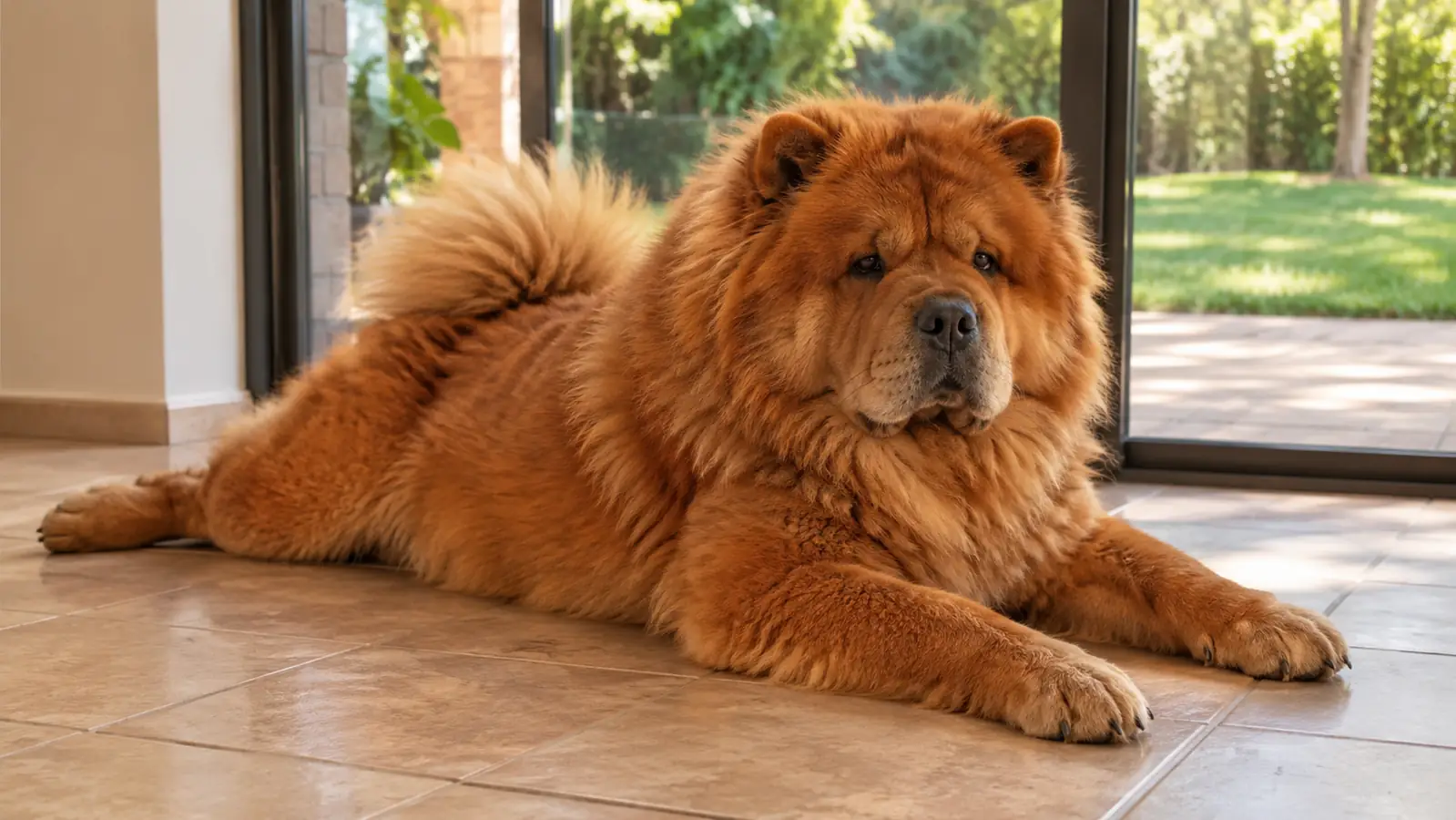
Summer is the other half. There is a shaded patio on the north side of the house, water in two places, and a cooling mat on the kitchen tile by the patio door that he claimed on the first hot day in June. It feels cool, not cold, and it does not replace shade, water or skipping the midday walk. It just gives him a place to land that is not the carpet.
People ask me about fish oil. I have never given it, so I am the wrong person to ask, and I say that plainly. It is a question for your vet, especially if your dog is on anything else. One supplement at a time, with notes, is how I have done this, and I am not going to pretend to know more than I do.
If your Chow is slow off the floor, start with the vet and then with this
Zesty Paws glucosamine soft chews, bacon, 90 count. Two chews a day for a 64 pound dog. Nine months in at our house, and the mornings are better than they were in February.
Amazon Check Today's Price on Amazon →