
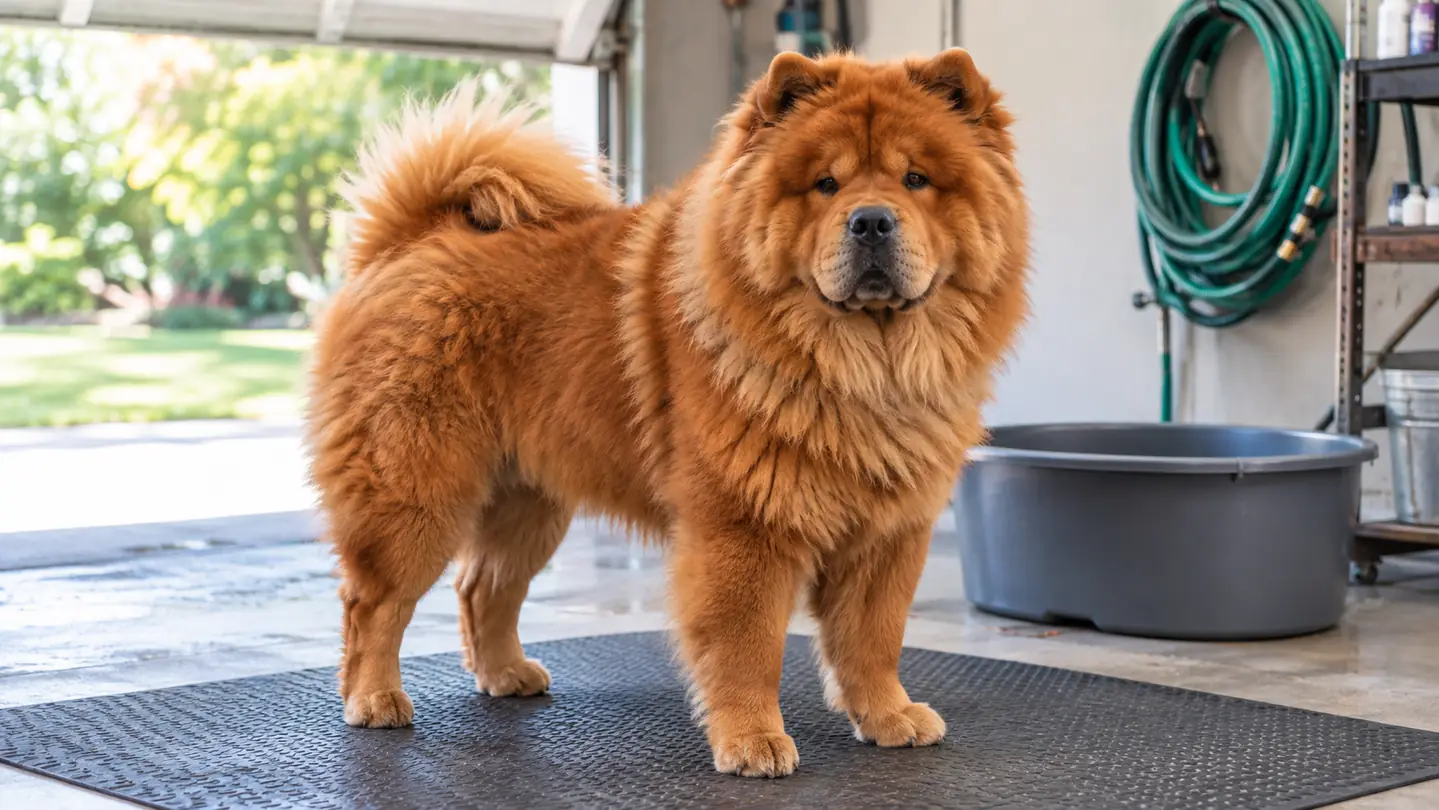
Bruno comes out of the plastic tub in the garage looking smaller, sadder, and still full of water. A Chow Chow has a soft undercoat and a long guard coat, and that undercoat holds water the way a sponge holds dishwater. For years I squeezed him out with old bath towels and let him air dry on the kitchen tile. It took about three hours. He spent most of that time giving me a look that suggested I had personally ruined his week. In August 2025 he got a hot spot on his neck under the ruff, and Dr. Nwosu treated it. I cannot prove a damp ruff caused it, but I stopped pretending a soggy undercoat was good enough. I bought a DOPICT high velocity dryer in February 2026. Nine months and about seven baths later, drying takes about forty minutes.
I am not a vet and not a professional groomer. I am a retired school office worker in Fort Collins, Colorado, with one seven-year-old male Chow named Bruno. He is sixty-four pounds, cinnamon red, rough coat, and he hates having his back feet touched. A groomer did him twice a year until the end of 2025. Since January 2026 I do the whole coat at home. Dan, my husband, holds the leash on bath day. That is the whole team. This article is about the drying part, which used to be the longest and most dramatic part of the job. I am not patient by nature. I am patient because Bruno is stubborn and because a half-dry Chow smells like a wet rug for the rest of the day.
The forty-minute bath day starts with the dryer, not the towels
The DOPICT high velocity dryer is the tool that got the water out of Bruno's undercoat instead of just off the top of it. It has three speeds, three nozzles, and a temperature range of 95 to 135 F. I keep it on the lowest heat and start on low speed.
Amazon Check Today's Price on Amazon →Before You Start
Brush out the loose undercoat before the bath, not after. A wet mat tightens, and a tight mat is not something a dryer can fix. I rake Bruno on the patio the day before a bath, then use the slicker around his ruff and behind his ears. I put a rubber mat on the garage floor because his hips are not what they were, and I keep the garage door cracked for air. If your dog has an open hot spot, a rash, or skin that looks infected, call your vet before you start. Drying broken skin is not a grooming problem. It is a vet question, and it is worth asking before you turn on a machine that moves a lot of air.
Step 1: Wash the coat all the way to the skin, then rinse longer than feels necessary
I wash Bruno in a plastic tub on the garage floor, with a hose from the utility sink and Dan on the leash. The first job is not soap. It is water. I pull the coat apart with my fingers and soak the undercoat until I can feel the water reach the skin. The guard coat can look soaked while the undercoat underneath is still dry, which is why I check with my hands instead of my eyes. If I skip that part, I am just washing the top layer and leaving the bottom layer dirty.
Then I shampoo, work it through the ruff and pants, and rinse until the water runs clear. Then I rinse for another minute. Shampoo left in a thick coat makes the hair clump and hold water, and it can leave the skin itchy. A clean coat dries faster and brushes out better. That is not a theory. It is what I see on the patio the next day. A dirty coat also holds an odor that no dryer can fix.
If Bruno has a hot spot or an irritated patch, I do not scrub it. I wash around it, rinse gently, and call Dr. Nwosu if it looks angry. A dog with broken skin needs a vet, not a louder dryer. The same goes for an ear infection. I never point the hose at his face or ears, and I do not use the dryer to dry the inside of an ear. That is not what it is for.
Step 2: Towel off the worst of it before the dryer comes out
I use old bath towels, the ones that have gone thin in the middle. I press and squeeze the water out of the ruff, the pants, and the belly. I do not rub. Rubbing makes the coat tangle, and a tangled Chow is a Chow who has decided grooming is a combat sport. Ten minutes of pressing removes the free water that would otherwise run down his legs and pool on the mat. It also gives him a minute to settle after the tub.
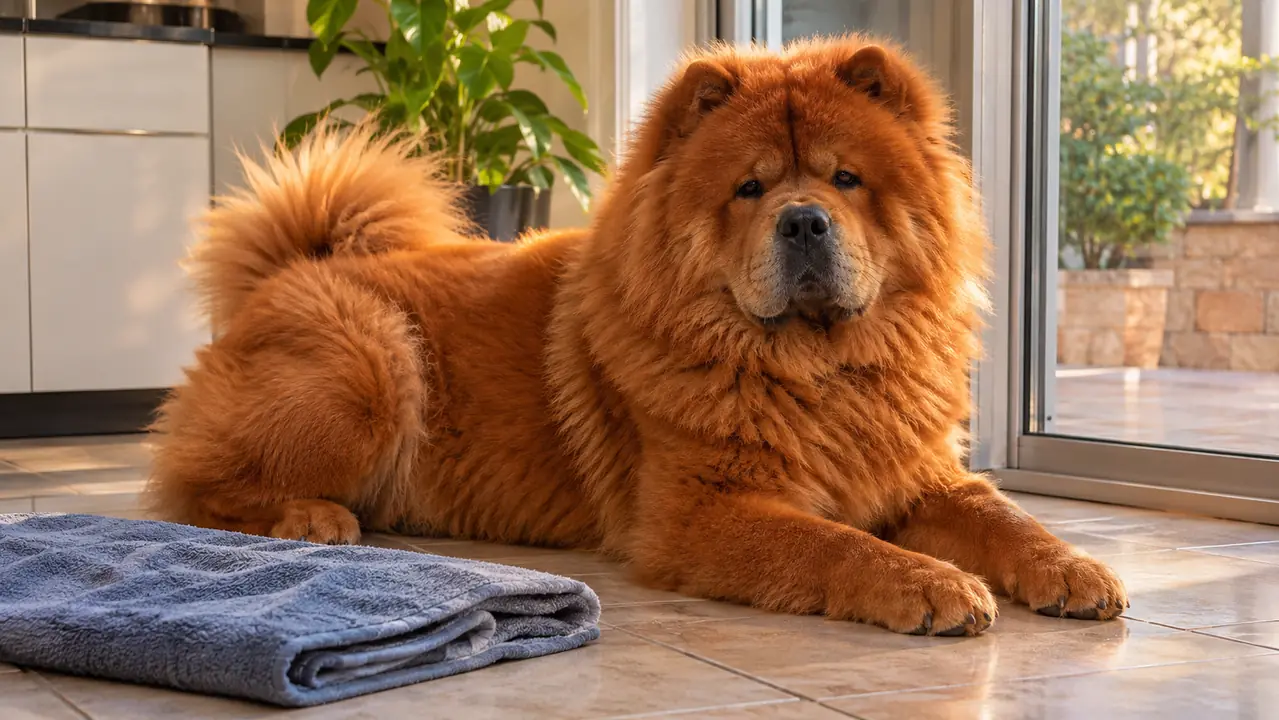
This step is not about getting him dry. It is about making the dryer's job smaller. A towel cannot reach the undercoat at the skin, but it can stop the coat from dripping. I keep a dry towel under him and one on the floor. By the time I turn the dryer on, he is damp rather than soaked, and he is less likely to get chilled in the garage even on a cool morning. A wet Chow in a closed garage can shiver, and a shivering Chow is not a cooperative Chow.
Step 3: Set the DOPICT on low heat and low speed, and let the dog settle before you aim it
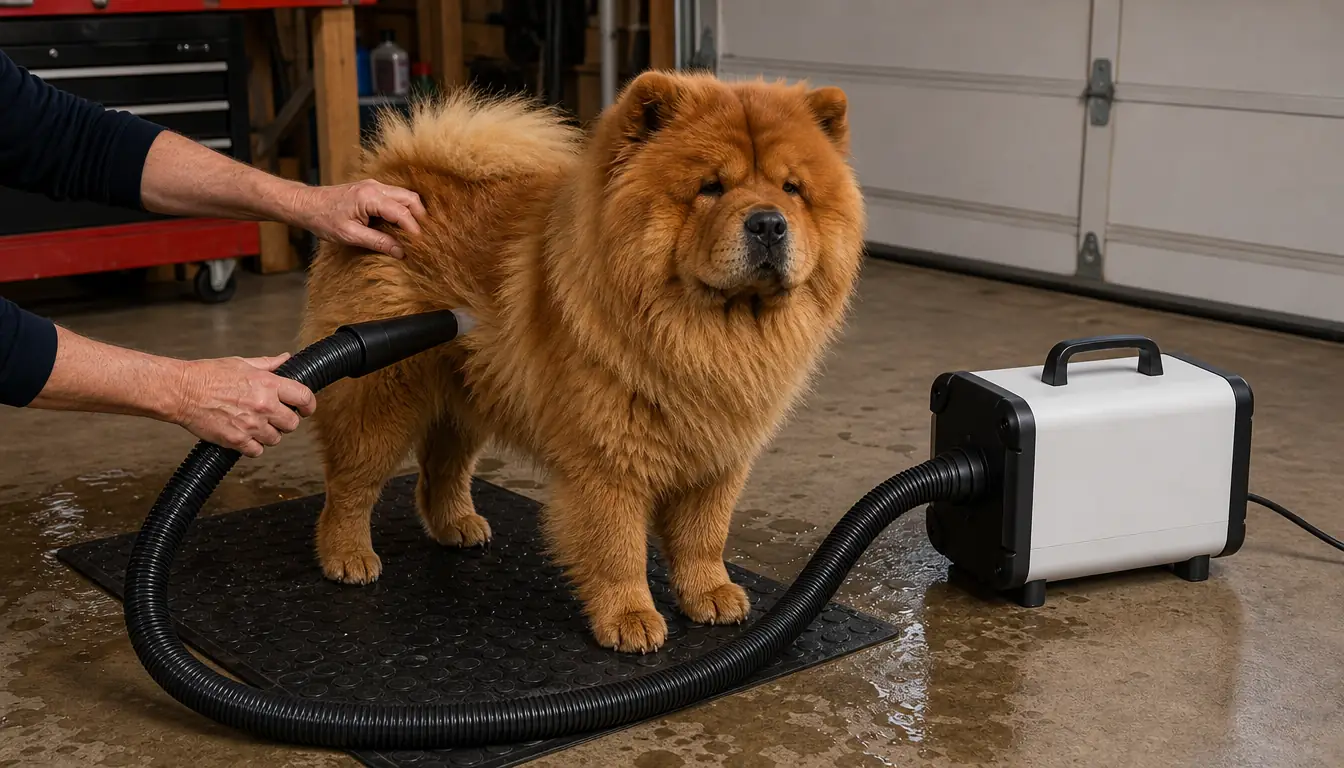
The DOPICT is corded, with three speeds and three nozzles, and it comes with a flexible spring hose. The motor is listed at 5.2 HP and 3800 watts. The unit weighs 9.22 pounds, and the temperature range is 95 to 135 F. I use the lowest heat and the low speed to start. I keep the nozzle moving and I never hold it in one place. A dryer that feels warm on my hand can feel much hotter on a dog's skin, especially under a thick coat.
Bruno refused the dryer on bath one. He tolerated it on bath two. By bath three he stood for it. I did not win that by force. I turned the unit on away from him, let him hear it, and let Dan keep the leash short but loose. I started at his shoulder, where he can see my hand, and I kept the first session short. If your Chow is like mine, he will not be talked into anything. He will decide the dryer is not killing him, and then he will stand there like he invented the idea.
It is loud. I am not going to pretend a high velocity dryer is quiet. The DOPICT has noise reduction built into the casing and a built-in temperature control protection system, and it is still loud in a garage. I close the garage door so Bruno cannot back into the driveway, and I keep the hose away from his face. I also put a rubber mat down. His hips were diagnosed with mild dysplasia in February 2026, and I do not ask him to stand on bare concrete for forty minutes. If he starts to slip, I stop and reset his feet.
The first bath was a negotiation. By the third bath he stood still, and forty minutes of noise beat three hours of damp fur and dirty looks.
Step 4: Dry in sections, lift the coat with your hand, and aim at the skin
I work in sections: back, sides, ruff, pants, legs, belly, tail. I slide my free hand under the coat and lift the hair so the air can reach the undercoat. Without that, the dryer just blows the top layer flat and the water stays at the skin. I keep the nozzle moving in small circles. I do not press it against him. The flexible hose lets me set the unit on the garage floor and move around him instead of dragging a box by the cord.
I start at his back end and work forward, but I save his back feet for last. He hates having them touched, and I would rather have the rest of him dry before we have that argument. Dan keeps the leash short enough that Bruno cannot spin away, but not so short that he feels trapped. When Bruno has had enough, I stop. A fight costs more time than a damp patch. I remind myself of that when I am forty minutes in and ready to be done.
The coat will lie flat and look dry before it is dry. The guard coat can look shiny while the undercoat is still damp. I part the coat with my fingers and touch the skin. If the skin feels cool and wet, I keep going. If the skin feels dry and the hair springs back, I move on. This is the part where people give up and reach for a towel. The towel is not going to reach the undercoat either. It just makes the top look finished.
Step 5: Finish the ruff, pants, and feet, then check the spots that hide water
The ruff is the last big job. It is thick under the neck, and it is where Bruno had his hot spot in August 2025. I dry it in layers, lifting the hair with one hand and moving the nozzle with the other. I do the pants on his back legs, the armpits, the groin, the tail, and between the toes. Those are the places that stay damp after the rest of him looks finished. They are also the places a dog will sit on if he is still wet.
When the dryer is off, I run my hands over him one more time. I check behind the ears, under the ruff, and inside the back legs. If I find a damp spot, I turn the dryer back on for another few minutes. If he is done, he is done. I would rather have one damp patch than a dog who hides when he sees the hose. After he is dry, I give him five minutes with the slicker behind the ears. The dryer lifts the coat. The slicker settles it. Neither one replaces the other.
Then he goes out to the patio and rolls on the concrete. Every time. A bath is not finished until Bruno has rolled on something dirty and given me a look. I have stopped taking it personally. The important part is that his skin is dry, his ruff is dry, and I am not leaving him in a damp coat for three hours while the afternoon cools down. A dry Chow is a comfortable Chow. A damp Chow is a dog who smells like a basement and wants to lie on my carpet.
What Else Helps
The dryer is the tool, but it is not the whole job. A Chow that is brushed weekly drops less undercoat in the tub and dries faster. I use the slicker for about five minutes most evenings, mostly on the ruff and behind the ears. On Sundays I use the undercoat rake for twenty to thirty minutes on the patio. During the coat blow in April and May, and again in October, I do that twice a week. I do not rake over a hot spot or irritated skin. The rake does not stop shedding. Nothing stops shedding. It just keeps the loose hair from turning into mats.
I do not shave him. A Chow's coat insulates him from heat and cold, and shaving it does not make summer easier. I bath him every six weeks, early in the morning when the forecast says the day will be in the 90s. Fort Collins is dry, but a wet Chow in a closed garage still gets chilly. I keep the garage door cracked and a fan moving air, not pointed at him. The vet tech trims his nails at checkups, and I leave that to her. I have never given him fish oil, and I do not add supplements without asking Dr. Nwosu. If your dog has skin trouble, ask your vet before you change the routine.
One more thing: I keep the dryer stored with the hose coiled and the nozzles in a small bin so I am not hunting for them with a wet dog in the tub. I also keep a towel on the floor where I stand. The garage floor gets slick, and I am sixty years old. I do not need to fall while Bruno is giving me the stink eye. A little setup makes the whole job less like a wrestling match and more like a routine.
If the undercoat is still damp, the bath is not finished
The DOPICT high velocity dryer is what I use on Bruno every six weeks: lowest heat, low speed, nozzle moving, about forty minutes. Seven baths in, it is the difference between a dry ruff and a damp one. It is loud, it takes practice, and it is still the best tool I have bought for his coat.
Amazon Check Today's Price on Amazon →