
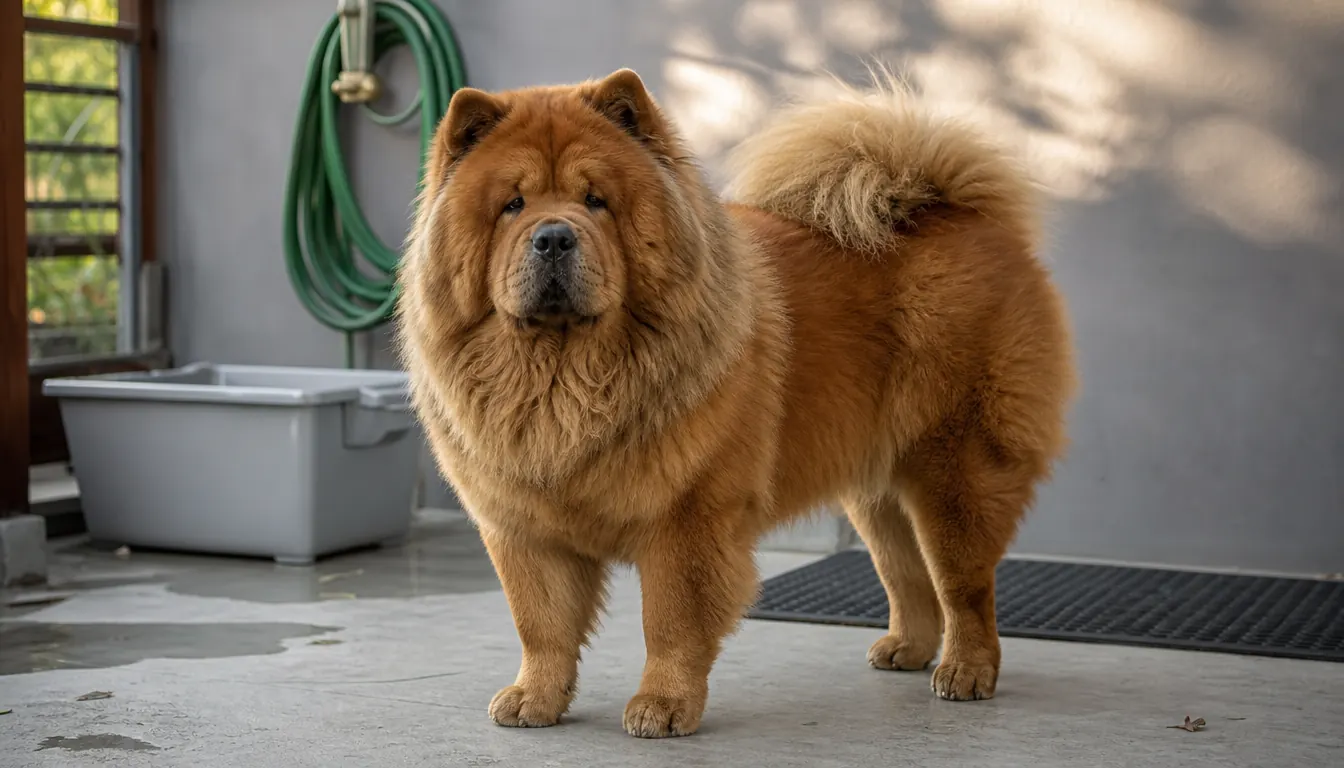
Here is the part of the undercoat rake conversation that usually gets skipped: it will not stop your Chow Chow from shedding. Not this one. Not any of them. I bought the Maxpower Planet rake in January 2026 with a fairly simple hope, which was that my kitchen tile would stop looking like a small animal had exploded on it. The tile looks better now, ten months later. The reason is not the number printed on the package, and it is not the reason most reviews give you. It is that I finally understood which side of the tool does which job, and how often I actually have to use it.
I am Bev Lindqvist. I am 60, retired after nearly three decades working the front office of a school, and I live in Fort Collins, Colorado with my husband Dan and a 7 year old cinnamon red rough coat Chow named Bruno. He is 64 pounds and he is my first Chow and my only dog. I am not a vet and I am not a professional groomer, and I say that up front because coat advice from someone with a title is a different thing from coat advice from someone with a rubber mat on a patio. Bruno's groomer did him twice a year through the end of 2025. Since January 2026 the whole coat has been mine.
The Quick Verdict
The best mat tool I have owned and a genuinely good weekly rake. It does not slow shedding the way the listing implies, and it cannot carry your whole grooming routine on its own.
Amazon Check Today's Price →The tool that finally got the mats behind his ears
Stainless steel teeth, a rubber handle, and two sides that do two different jobs. Ten months of a double coat and mine still works.
Amazon Check Today's Price on Amazon →What Nobody Tells You Before You Buy One
The listing says it reduces shedding by 95 percent. Read a number like that the way you would read any label. It describes how much of the loose hair the teeth lift out of a coat that is already ready to let go, in one session, on one dog, on the day someone tested it. It is not a promise that your Chow will shed 95 percent less across a year, and no tool made of steel and rubber can make that promise. Bruno shed before I bought this rake and he sheds now. What changed is where the hair ends up. In April and May I was pulling it out of the teeth instead of sweeping it off the tile, and that is a smaller and more honest thing to be pleased about.
The second thing nobody mentions is that a rake is a weekly tool and not a daily one. I bought a self cleaning slicker brush in the same January order, and for the first month I assumed the rake would take over from it. It did not, and it was never going to. The slicker does five minutes every evening on the ruff, behind the ears and down the pants. The rake comes out on Sunday morning and does the heavy lifting. If you buy the rake as your only tool and expect it to be your whole routine, you will be disappointed by the third week and you will blame the tool for what is really a planning problem.
The third thing is the dog himself. Bruno is aloof, and he is stubborn in the particular Chow way where he does not fight you, he simply becomes a piece of furniture and waits for you to finish being tiresome. The first two Sundays he stood for about four minutes and then walked off. What worked was not holding him still. It was doing the work in short passes, stopping while he was still relaxed, and putting the tool down before he decided he was done. By the third Sunday he was standing for twenty minutes. None of that is the rake. All of it decides whether the rake ever gets used.
How Ten Months With It Actually Went
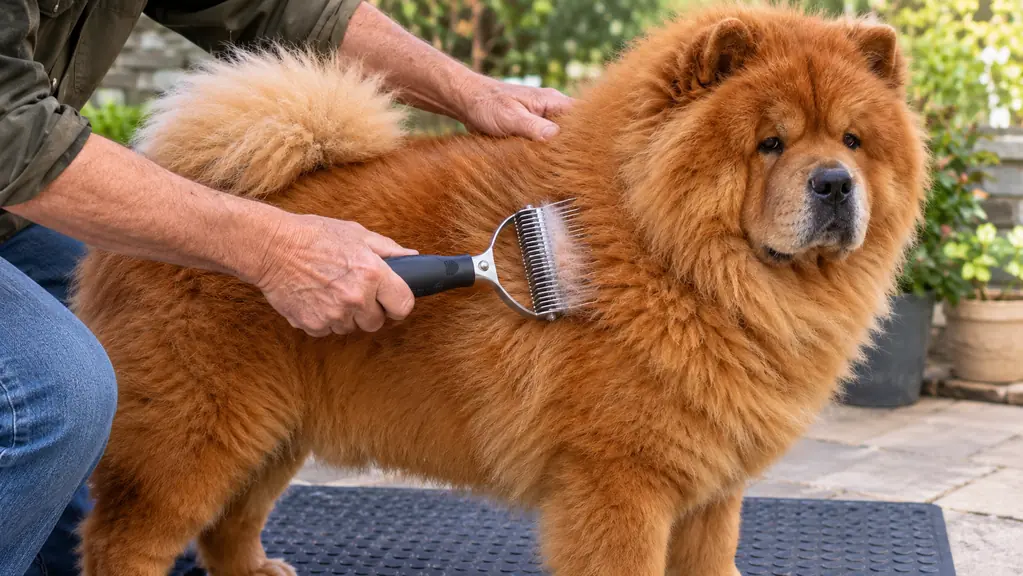
Ten months in, the routine looks like this. Sunday morning, back patio, north side of the house, rubber mat on the concrete. Twenty to thirty minutes depending on what his coat is doing that week. During the coat blows in April and May and again in October it is twice a week and closer to thirty minutes. I work in sections: shoulder to hip, then the sides, then the ruff, then the pants if he will let me. Bruno gets a break halfway through whether he seems to need one or not. Fort Collins in July is hot by ten in the morning, so in summer we start before eight.
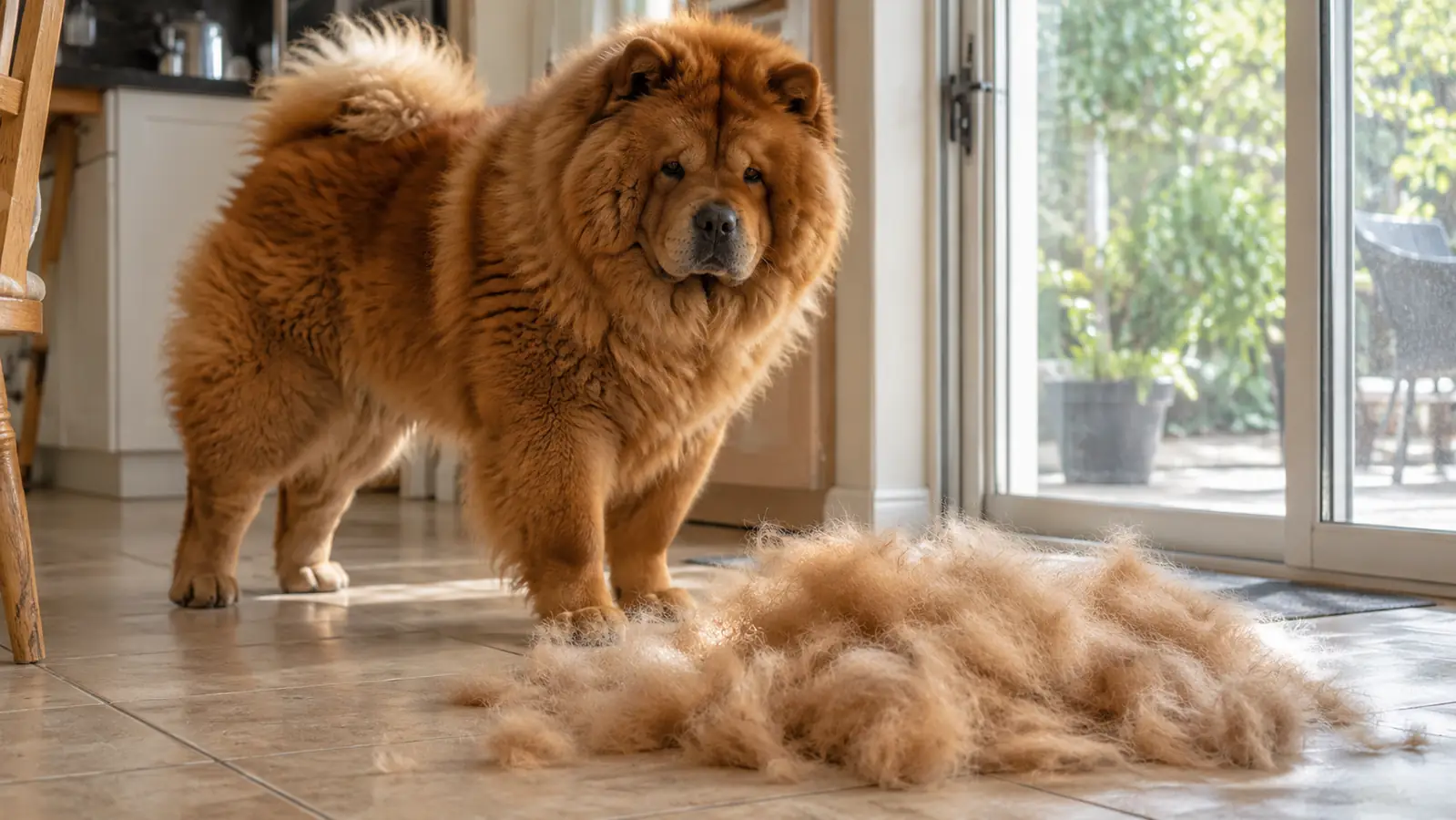
By the second week the tumbleweeds on the kitchen tile were clearly fewer. I want to be careful about what that means. It does not mean he stopped shedding. It means the loose undercoat that would have drifted across the floor and collected under the sofa was coming out in my hand on Sunday instead. Over ten months that adds up to a house that needs sweeping less often, which is a smaller claim than the listing makes and a far more useful one. Dan noticed before I said anything, and Dan does not notice anything.
The tool itself has held up. Stainless steel teeth, rubber handle, two sides, and after ten months of a double coat the teeth are still straight and the handle has not loosened. It measures 6.6 by 3.9 by 2 inches and weighs 4.59 ounces, so it is light in the hand. On a 64 pound dog that means more passes than a bigger tool would need. I have small hands and I like the weight. If you have large hands you will probably hold it closer to the head than feels natural at first, and you will notice the size more than I do.
The October coat blow is the test I trust most, because by then the novelty was long gone. In April I had been fussing over every stroke. In October I was just doing the job. Same result: the tile in the laundry room stayed manageable, the mats behind the ears did not come back, and I did not once have to call the groomer in a panic. That is a boring sentence and it is the most useful thing I can tell you about a grooming tool. It did the thing, twice, in the two months of the year that matter.
The Two Sides, and the One Most People Reach For First
The Maxpower Planet rake has two sides, and that is both the whole point of the design and the source of most of the bad advice about it. The 9 tooth side is for mats and tangles. The 17 tooth side is for thinning and deshedding. That is the entire instruction, it is printed on the package, and people still get it backwards because the side with fewer teeth looks like the serious one. It is not the serious one. It is the rescue tool you reach for when you find a knot behind an ear, and it is the side most likely to hurt your dog if you drag it through general coat.
I use the 9 tooth side maybe once a month, on a mat behind an ear or in the ruff, and I use it slowly with almost no pressure. The teeth are sharpened but finely rounded, which is a real difference from the cheap rakes with stamped edges, but rounded is not the same as harmless. If you dig, you will scratch skin. The first time I found a mat behind Bruno's left ear I went at it like I was combing a wig, and he turned his head and looked at me with an expression I have learned to respect. Now I hold the mat between two fingers and work the edge of it, a few strokes at a time.
The 17 tooth side does the actual work. Long, slow strokes in the direction the coat grows, starting at the shoulder and moving back. I do not press. The teeth should be lifting hair, not scraping skin, and if the tool is skipping instead of gliding you are either going too fast or the coat is not ready. The hair collects in the teeth as you go and you pull it out with your fingers every few passes. There is no button and no retracting mechanism on this one, nothing self cleaning about it. That is a small annoyance and I would rather have a simple tool that works than a complicated one that jams.
Where It Comes Up Short
Where it comes up short is the back end of the dog. Bruno hates having his back feet touched, and the pants on a rough coat Chow are thick and feathered and exactly the kind of hair that mats if you ignore it. The tool is small, so getting through the pants means a lot of short strokes, and Bruno's patience for that region is measured in seconds. I do what I can in the time he gives me and I let the slicker handle the rest across the week. If your dog is relaxed about his back legs you will have an easier time than I do, and I envy you.
The second shortfall is a mat that has already packed. This tool will open a loose tangle. It will not dissolve a felted knot the size of a walnut, and if you try, you will pull skin and your dog will remember it longer than you will. Twice in ten months I found a mat that was past what I was willing to work on, and both times I called the groomer I used to use and paid her to deal with it. That is not a failure of the tool. It is the tool telling me where my limits are, which is worth knowing before you make a dog sore.
The third shortfall is simply size. Extra wide is how the listing describes it, and maybe it is wide for a cat, but on a 64 pound Chow with a full ruff it is a detail tool rather than a body tool. Twenty five minutes of steady work is about where my forearm starts to complain. A bigger head would cover more coat per stroke and would also be easier to misuse. I have made my peace with the tradeoff, and I would not call it a design flaw. I would call it a good reason to buy the Maxpower Planet rake as one part of a set instead of the only thing in your grooming bin.
What I Liked
- The 17 tooth side does the weekly work without cutting or blunting the guard coat the way a blade tool does
- The 9 tooth side opens mats behind the ears cleanly when it is used slowly and with almost no pressure
- Stainless steel teeth with finely rounded tips, plus a rubber handle that does not slip when your hands are damp
- Light enough at 4.59 ounces to work a big coat for half an hour without hand cramp
- Ten months and two coat blows later the teeth are still straight and the handle has not loosened
Where It Falls Short
- It does not reduce shedding by anything close to what the listing implies
- No self cleaning mechanism, so you pull the hair out of the teeth with your fingers every few passes
- Small head means a lot of short strokes on a large double coated dog
- The 9 tooth side is easy to misuse and will scratch skin if you press
- It cannot do the job alone. You still need a daily slicker and a bath you can dry properly
Ten months, one 64 pound Chow, two coat blows and roughly forty Sunday sessions, and the teeth are still straight. It is not the shedding cure the listing implies. It is the best mat tool I have owned.
The Skin Under the Ruff Is the Part to Watch
The part I would flag to any Chow owner is the skin under the ruff, and this has nothing to do with the tool and everything to do with the dog. Bruno had one hot spot, on his neck under the ruff, in August 2025, and Dr. Nwosu treated it. He has not had one since, and I intend to keep it that way. Before I rake, I part the coat and look at the skin. After I rake, I look again. If the skin is pink or warm or he flinches, the tool goes away and I leave that area alone until it settles. A rake is not a treatment and it is not a substitute for a vet visit.
I also never rake over a hot spot or irritated skin, and I do not rake a dog who has just come in from the heat and is still panting. Bruno pants hard once it passes about 80 degrees, and a panting dog is not a relaxed dog, and a rake on a tense dog is how people get bitten. Summer sessions happen before nine in the morning or not at all. None of that is in the instructions. All of it matters more than which side of the tool you use.
What It Does Not Replace
It does not replace a bath. A rake lifts loose undercoat. It does not clean the coat, and it does not get down to the skin on a dog with a ruff like Bruno's. He gets a bath every six weeks in the garage, in a plastic tub on the floor, with Dan holding the leash and me doing the work. The drying is the part that matters. A coat dried to the skin is why I bought a high velocity dryer in February 2026, because of the damp ruff and the hot spot the summer before. Forty minutes with the dryer against about three hours of towels and air. Without the bath and the dryer, the rake is working on a coat that is already carrying old oil and dead hair close to the skin, and it will not get far.
It does not replace the daily slicker either, and this is the point I would press hardest with a new Chow owner. Five minutes in the evening with the slicker on the ruff, behind the ears and down the pants is what keeps mats from forming in the first place. Within three weeks of starting that, the mats behind Bruno's ears stopped coming back. The rake then has less to do on Sunday, which is the correct order of operations. Buy the rake expecting it to do the slicker's job and you will spend Sunday afternoon fighting knots that a five minute evening habit would have prevented.
And it does not replace your eyes. The tool tells you what is happening in the coat if you pay attention. The hair that comes out should be soft undercoat, not chunks of top coat. If you are pulling out long guard hairs with a blunt cut end, you are working too deep or too hard, and you should stop and rethink what you are doing. That is a judgment call no product description can make for you.
How It Compares to the Blade Tool I Stopped Using
Before any of this I used a blade style deshedding tool from the pet store, and I used it through 2025. I stopped because of what it did to the guard coat. The blade cut through the top coat and left the finished result looking ragged, like a bad haircut on a good suit. A rake with teeth does not cut. It lifts. That is the whole difference, and it is a difference you can see after about two months, when the coat grows back in and one patch looks blunt while the rest looks like fur. I am still growing out a section on his left shoulder from the blade tool, and I expect it will take another year.
I do not know what a 95 percent reduction in shedding would even look like in a house with a Chow in it. I know what my tile looked like in March and what it looks like now, and I know the difference is real and modest and mostly the result of a routine I built around the tool. If you want a number, here is one I can stand behind. Ten months, roughly forty Sunday sessions, two coat blows, one tool that still works. That is the review.
Who This Is For
This is for the owner of a double coated dog who has already accepted that the coat is a weekly job and not a crisis. It suits you if you are willing to buy a daily tool as well, if you will work in sections instead of chasing the whole dog around the yard, and if you can read your dog's patience and stop before it runs out. Chow owners in particular will get value from the 9 tooth side, because Chows grow mats behind the ears and in the ruff faster than almost any breed I have been around. If you already brush a few times a week and you are just tired of the knots behind the ears, this is the tool that ends that specific argument.
Who Should Skip It
Skip it if you want one purchase to solve shedding, because it will not. Skip it if your dog already has felted mats against the skin, because that is a groomer or a vet and not a mail order tool. Skip it if you will not buy a slicker and a dryer to go with it, since the rake is one part of a system and a weak one standing alone. And skip it if your dog will not be handled at all, because no teeth on any tool fix that. That is a training problem wearing a grooming problem's clothes, and it needs a different kind of Sunday.
If your Chow mats behind the ears, start here
Pair the Maxpower Planet rake with a daily slicker and a bath you can dry properly. That combination is what changed my kitchen floor, not the number on the package.
Amazon Check Today's Price on Amazon →